What Is The Knowledge? The Exam That Makes London Cabbies the Best Guides in the World
Ask anyone what makes London black cabs different from regular taxis and the answer usually involves the vehicle — the distinctive shape, the turning circle, the partition between driver and passenger. But the real difference isn’t the cab. It’s the person driving it.
Every licensed London black cab driver has passed The Knowledge of London.
It’s the most demanding taxi licensing exam in the world and it takes an average of three to four years to complete. Some people take longer. Some never finish. The dropout rate is brutal — estimates range from 70% to 80%. Of every ten people who start studying, only two or three make it through to the end.
Here’s what they have to learn, and why it makes our drivers the best tour guides you’ll find anywhere in the city.
What the exam actually involves
To pass The Knowledge, a candidate must memorise the location and route to every street within a six-mile radius of Charing Cross. That’s approximately 25,000 streets. They must also know the locations of thousands of “points of interest” — hotels, restaurants, hospitals, theatres, embassies, government buildings, courts, police stations, churches, mosques, synagogues, parks, squares, landmarks, monuments and any other notable destination a passenger might ask to be taken to.
But knowing where things are isn’t enough. The exam tests the ability to work out the best route between any two points in London, on the spot, from memory. No maps. No sat-nav. No notes. Just recall.
The examiner gives you a starting point and a destination. You have to describe the route — every turn, every street name, every landmark you’d pass — in sequence, without hesitation. If you pause too long or make a mistake, you fail that “run.” Then they give you another one. And another.
Candidates are tested on around 320 standard “runs” — routes between commonly requested destinations. But the examiner can (and does) deviate from the standard list. They’ll ask about obscure streets, test routes that cross awkward junctions, and throw in questions about one-way systems, road closures and points of interest along the way.
The “appearances”
The Knowledge isn’t a single exam that you cram for and sit on one day. It’s a series of oral examinations — called “appearances” — conducted face-to-face with an examiner at the Public Carriage Office in Southwark. The first appearance tests basic route knowledge. Subsequent appearances get progressively harder, covering more obscure areas and testing the ability to link routes fluently.
There are several stages. Early on, candidates attend an appearance every 56 days. As they improve, the interval shrinks — 28 days, 21 days, and eventually every 14 days for the final stage. At each appearance, the examiner asks a series of routes and grades the candidate’s knowledge. If you perform well, you progress. If you don’t, you stay at the same level until you do. Or you quit.
The whole process typically takes between two and a half and four years. Some candidates do it in less. Some take five or six years. A few famously stubborn individuals have spent the better part of a decade on it.

How they study
Drive around London on any given day and you’ll see Knowledge students — “Knowledge boys” and “Knowledge girls” in cabbie slang, regardless of age or gender. They’re the ones on mopeds and scooters with clipboards mounted on the handlebars, riding the routes over and over, committing every turn and street name to memory.
The process is called “doing the runs.” Students take a map of London, identify the start and end points of a standard route, and then physically ride the route on a moped. They do this hundreds of times. Then they do it again from memory, without looking at the map. Then they practice describing the route verbally, as if they were in the exam room.
Many students attend Knowledge schools — small private colleges that coach candidates through the exam. The most famous is probably the Knowledge Point School in Caledonian Road, but there are several across London. They provide route lists, practice sessions and mock examinations. But ultimately, the learning happens on the road. There’s no substitute for physically riding the streets.
A 2011 study by University College London found that the hippocampus — the part of the brain associated with spatial memory — is physically larger in qualified London cabbies than in the general population. The process of memorising London’s street network literally changes the structure of the brain. It’s one of the most frequently cited studies in neuroscience when discussing the brain’s capacity for spatial learning.
Why it matters for passengers
Sat-nav exists. Google Maps works. So why does this matter?
Because sat-nav gives you A-to-B. The Knowledge gives you a human being who understands London as a connected, living place. A cabbie who’s done The Knowledge doesn’t just know the fastest route from your hotel to the Tower of London. They know why the streets are laid out the way they are. They know which buildings survived the Blitz and which ones replaced what was lost. They know that the little alley between two office blocks used to be a medieval lane. They know where the Roman wall runs, where the plague pits are, where the old rivers flow underground.
On a sightseeing tour, this is the difference between a driver and a guide. Our cabbies don’t follow a script. They don’t recite memorised facts. They talk about London the way you talk about your own neighbourhood — with the confidence of someone who’s walked and driven every inch of it, who knows its quirks and shortcuts and stories, and who genuinely loves showing it to people who haven’t seen it before.
That’s three to four years of training showing up in a four-hour conversation. It’s the reason we run our own fleet rather than contracting random drivers. Every cabbie who works for Classic Taxi Tours has The Knowledge. Every one of them has put in those years on the moped, in the exam room and on the streets.
Is The Knowledge under threat?
There’s been talk for years about whether The Knowledge is sustainable. Ride-hailing apps have disrupted the private hire market. The number of Knowledge students has fallen — in the 1990s there were around 5,000 candidates in the system at any one time. Now it’s closer to 1,500. Some people argue that sat-nav has made the exam redundant.
The counterargument is that sat-nav hasn’t made knowledgeable drivers redundant — it’s made them more valuable. When everyone has a phone that can give basic directions, the thing that sets a black cab apart is the driver’s expertise, their ability to adapt to traffic in real time, and the depth of knowledge they bring to the journey. You can’t get that from an app. You can only get it from someone who’s spent years learning the city at street level.
For our business, The Knowledge isn’t just tradition. It’s the product. When you book a Big 5 tour with us, you’re not paying for a car and a driver. You’re paying for someone who can take you through 2,000 years of London history without checking their phone once. That’s what The Knowledge delivers, and it’s why we’ll never replace it with a GPS screen and a laminated script.
Book a tour with a Knowledge-qualified cabbie — Big 5 London Tour, 4 hours, £299 per cab, up to 6 guests.

Latest Tour News & Facts
London At Night: The Best Landmarks to See After Dark
London With Kids: A Family-Friendly Sightseeing Guide

What Makes London Cabbies the Best Tour Guides in the World
A Wheelchair-Friendly Sightseeing Guide
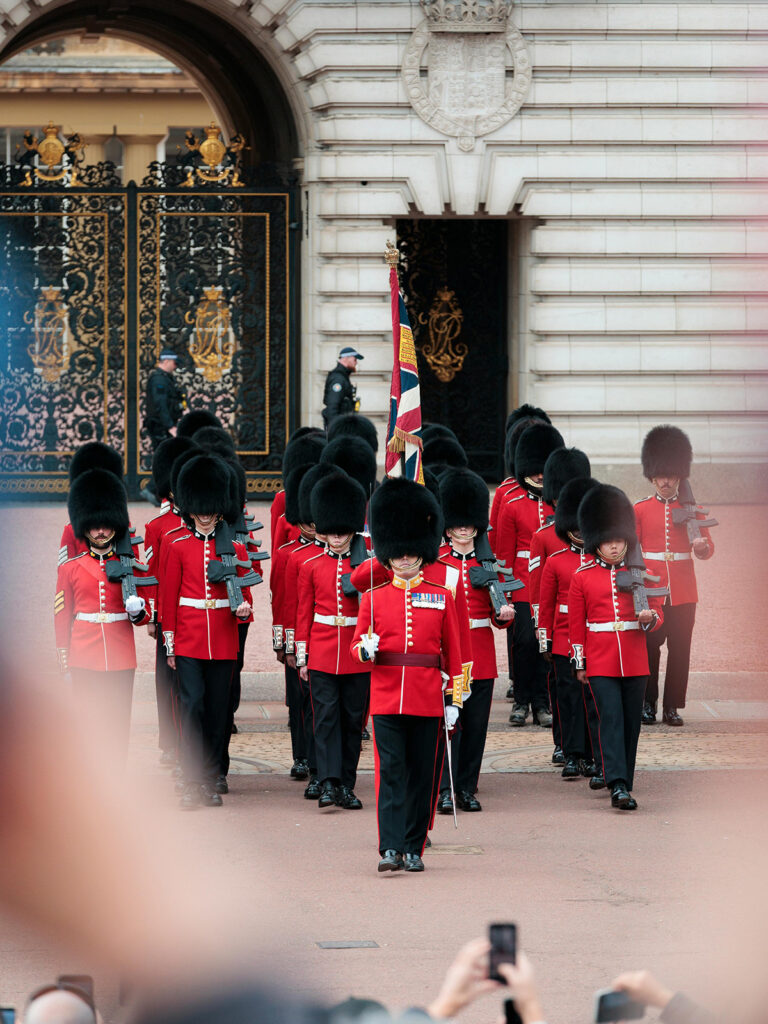
Changing of the Guard: Insider Tips
Ready to see London the way it was meant to be seen? Jump in a classic black cab and let our expert cabbies take you on the tour of a lifetime. Private tours, historic landmarks, and memories you'll never forget.
Also available on Viator • GetYourGuide • TripAdvisor