The Big 5 London Landmarks — And Why Every Visitor Needs to See Them
There’s a reason certain London landmarks keep showing up on every travel list, every postcard rack and every tourist’s phone camera. They’ve earned it. Not through marketing or Instagram algorithms, but through centuries of history that genuinely matters.
We call them the Big 5. Buckingham Palace. Big Ben. The Houses of Parliament. The Tower of London. Tower Bridge.
Five landmarks. Five locations that between them cover nearly a thousand years of British history — from medieval fortresses to Victorian engineering marvels to the working heart of democracy. Miss any one of them and you’ve left a gap in your London experience that no amount of street food markets or rooftop bars can fill.
Here’s what makes each one worth stopping for.
Buckingham Palace
Let’s start with the one everyone recognises. Buckingham Palace has been the official London residence of the British monarch since Queen Victoria moved in back in 1837, though the building itself dates to 1703 when it was a townhouse for the Duke of Buckingham. It’s gone through so many renovations and extensions over the centuries that almost nothing of the original remains.
What you see today is that famous east-facing facade — the one with the balcony where the Royal Family waves during major events. It was actually refaced in Portland stone in 1913, which is why it looks so clean compared to the soot-stained buildings around it. There are 775 rooms inside, including 19 State Rooms, 52 royal and guest bedrooms, 188 staff bedrooms, 92 offices and 78 bathrooms. Nobody’s ever counted the windows properly. There are too many.
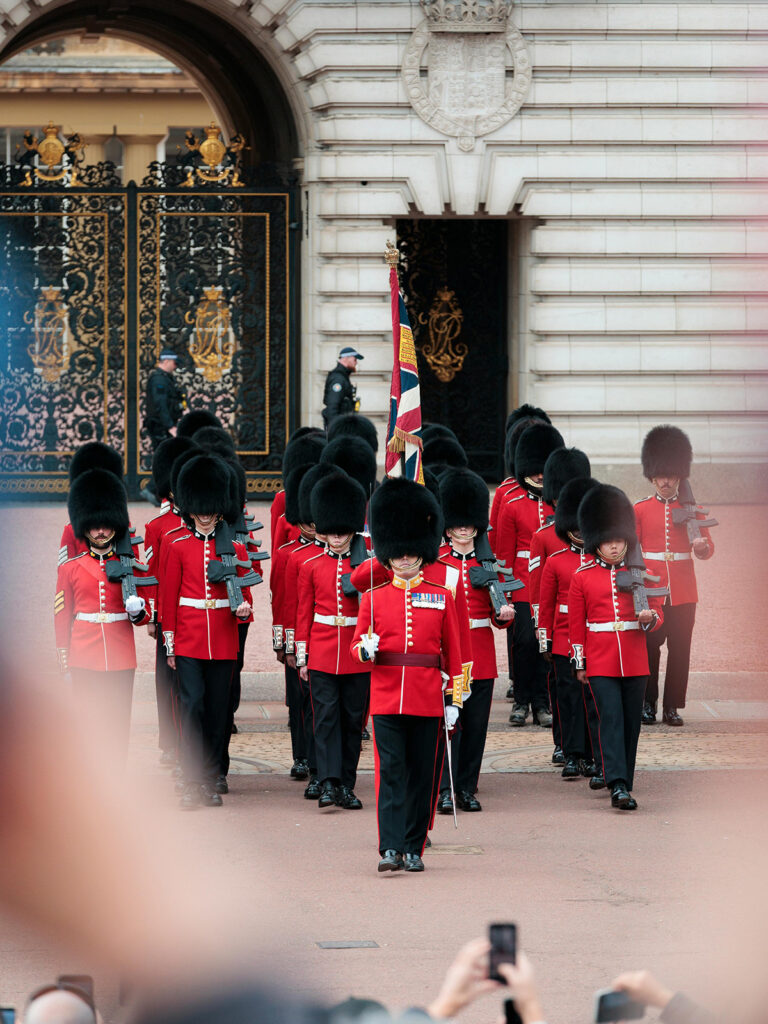
The best bit for most visitors isn’t the building itself, though. It’s the Victoria Memorial right in front — that enormous white marble monument to Queen Victoria that serves as a brilliant gathering point. Get there early enough on the right day and you’ll catch the Changing of the Guard from a decent vantage point. Turn up late and you’ll see the backs of several hundred other tourists’ heads instead.
Our drivers know exactly where to position you for the best view. It helps when you’ve been doing this for years.
Big Ben and the Elizabeth Tower
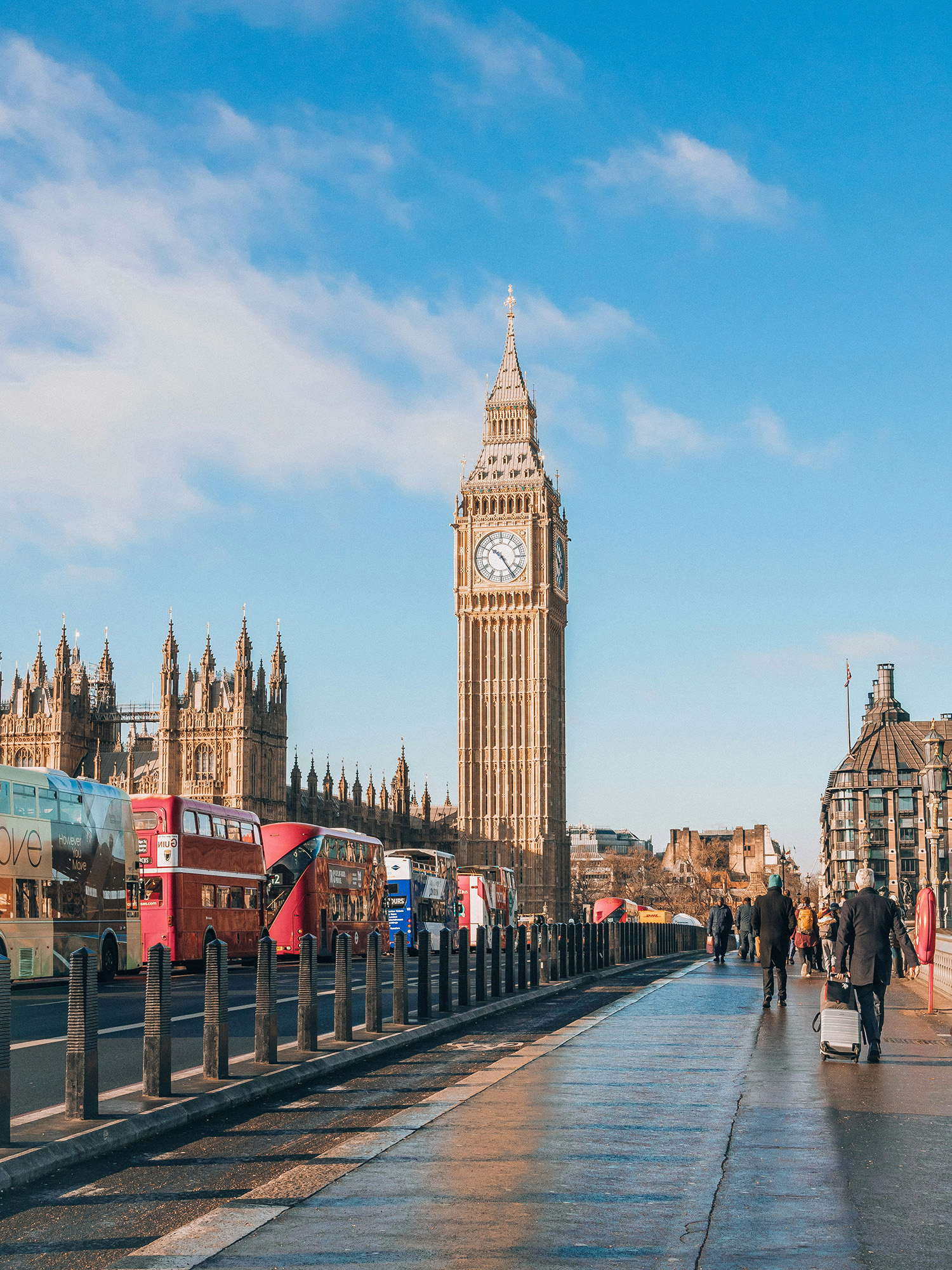
Here’s something that catches people out: Big Ben isn’t actually the tower. Big Ben is the bell inside it — the massive 13.5-tonne bell that’s been chiming on the hour since 1859. The tower itself is called the Elizabeth Tower, renamed in 2012 for the Queen’s Diamond Jubilee. Before that it was simply the Clock Tower, which is arguably a better name because it tells you exactly what it is.
The clock faces are 7 metres across. Each minute hand is 4.3 metres long and weighs about 100 kilograms. And the whole thing keeps time to within a second or two — they use old penny coins stacked on the pendulum mechanism to make tiny adjustments. More pennies make the pendulum fractionally shorter, which speeds the clock up. Fewer pennies slow it down. A system designed in the Victorian era, still working with pre-decimal coins.
You can’t miss it. It dominates the Westminster skyline and it sounds exactly like it does on the news. That deep, resonant bong carries across the river and through the surrounding streets. Stand close enough on a quiet morning and you can feel it in your chest.
Between 2017 and 2022, the tower was wrapped in scaffolding for a major restoration. The whole thing was cleaned, repaired and restored to something close to its original colour scheme — which turned out to be a lot more colourful than anyone expected. The Victorians liked their blue and gold detailing. Worth looking closely when you’re there.

The Houses of Parliament
Properly known as the Palace of Westminster, this is where British laws get made. It’s been the seat of government in some form since 1295 — making it one of the oldest parliamentary institutions in the world. The building you see today is mostly Victorian, though. The medieval palace burned down in a fire in 1834 and was rebuilt in that Gothic Revival style by Charles Barry and Augustus Pugin.
Pugin was responsible for almost every interior detail. The wallpaper, the tiles, the inkwells, the umbrella stands — all of it. He was so consumed by the project that it contributed to his mental breakdown. He died at 40. The building he helped create has outlasted him by nearly two centuries.
There are two main chambers inside. The House of Commons, where elected MPs sit, and the House of Lords, where appointed and hereditary peers debate legislation. The Commons chamber is deliberately built too small to seat all 650 MPs at once — Winston Churchill insisted on this when it was rebuilt after being bombed during the Blitz in 1941. His reasoning was that a packed house creates urgency and a sense of confrontation. An empty-looking chamber with everyone spaced out would feel flat.
From the outside, the most striking feature (apart from the Elizabeth Tower at one end) is the Victoria Tower at the other. It’s actually taller than Big Ben’s tower, though far less famous. The parliamentary archives are stored inside it — Acts of Parliament going back to 1497, including the original Death Warrant of Charles I.
The Tower of London
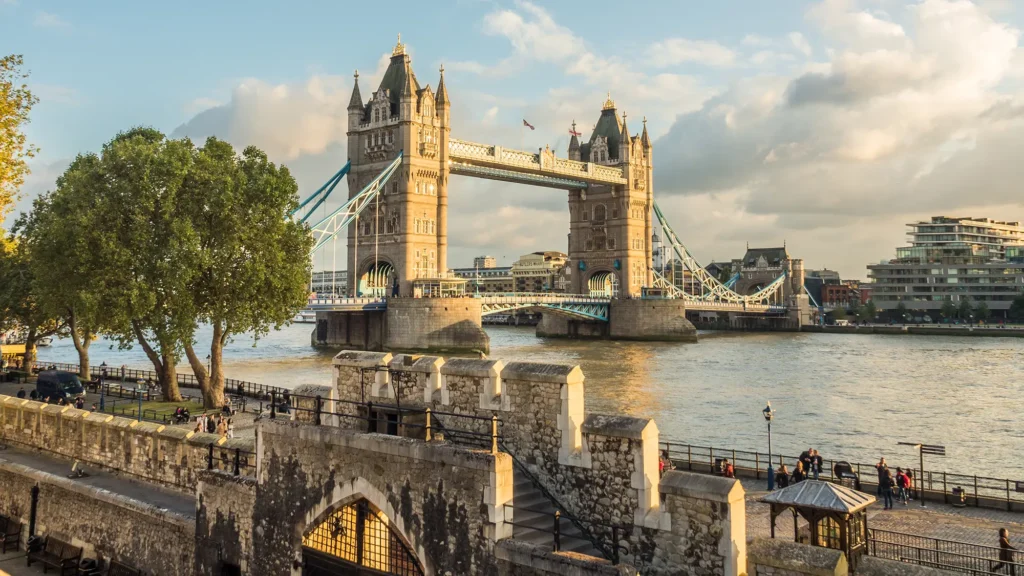
This is the one that tends to surprise people. They expect a single tower. What they get is an entire fortress complex — walls within walls, multiple towers, a moat (now dry and grassed over), and nearly a thousand years of history crammed into a relatively compact riverside site.
William the Conqueror started building it in 1066, right after winning the Battle of Hastings. He needed something that would intimidate the local Londoners into submission. It worked. The White Tower — that big square keep in the centre — was the tallest building in London for centuries. It was designed to be seen. A statement of raw Norman power dropped into a conquered Saxon city.
Over the centuries it served as a royal palace, a prison, a place of execution, an armoury, a treasury, a zoo (genuinely — there were lions and an elephant here at various points) and a mint. Today it houses the Crown Jewels, which are frankly worth the visit on their own. The Imperial State Crown alone contains 2,868 diamonds, 273 pearls, 17 sapphires, 11 emeralds and 5 rubies.
The Yeoman Warders — the Beefeaters — still live on site. There are about 35 of them. Each has served at least 22 years in the armed forces. They’re real people with real flats inside the fortress walls. Their children grow up there. It’s one of the strangest residential addresses in London.
And then there are the ravens. At least six must be kept at the Tower at all times. Legend has it that if the ravens ever leave, the kingdom will fall. Nobody genuinely believes this, but nobody’s willing to test it either. The ravens have their wings clipped, just in case.
Tower Bridge
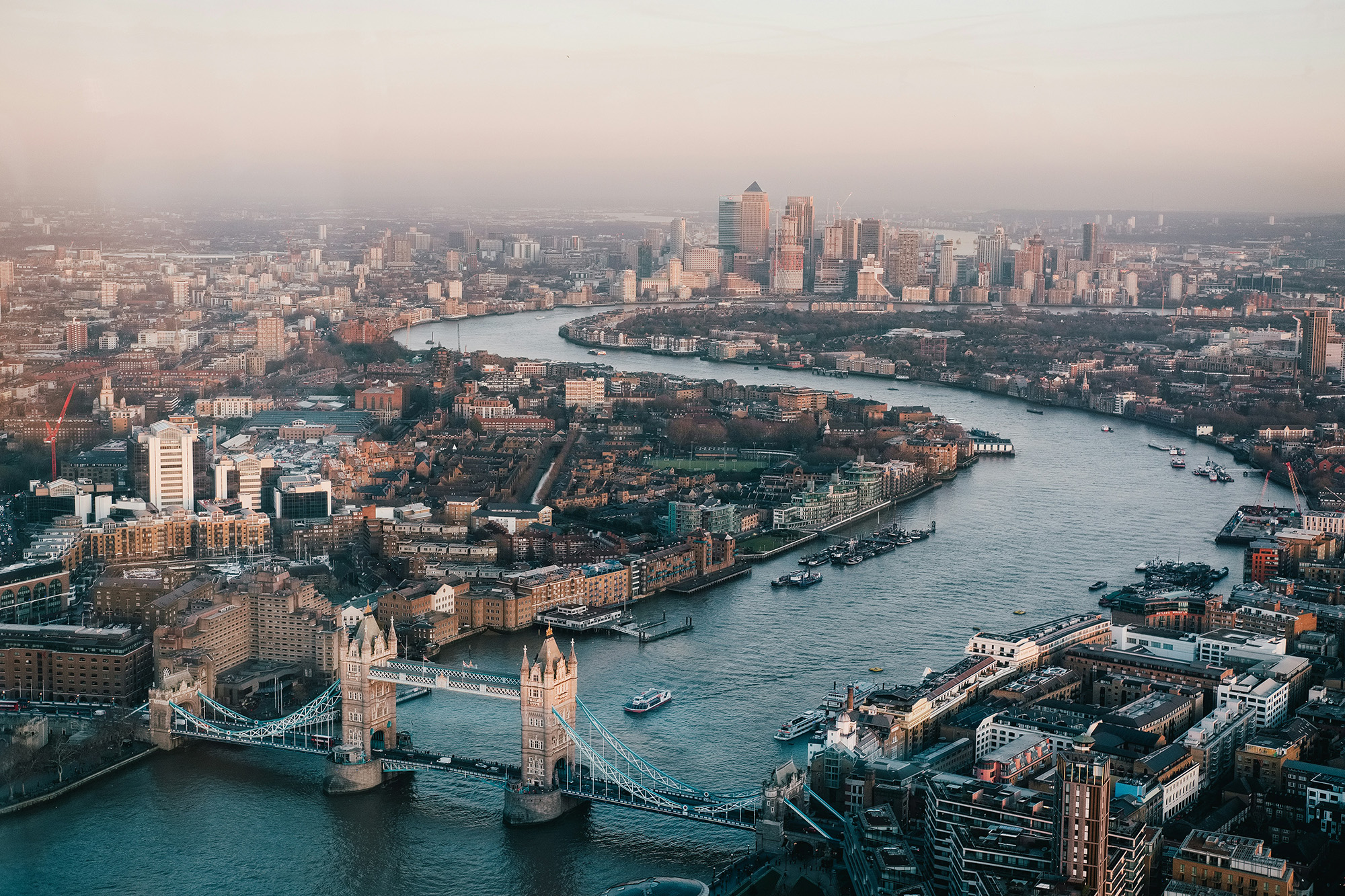
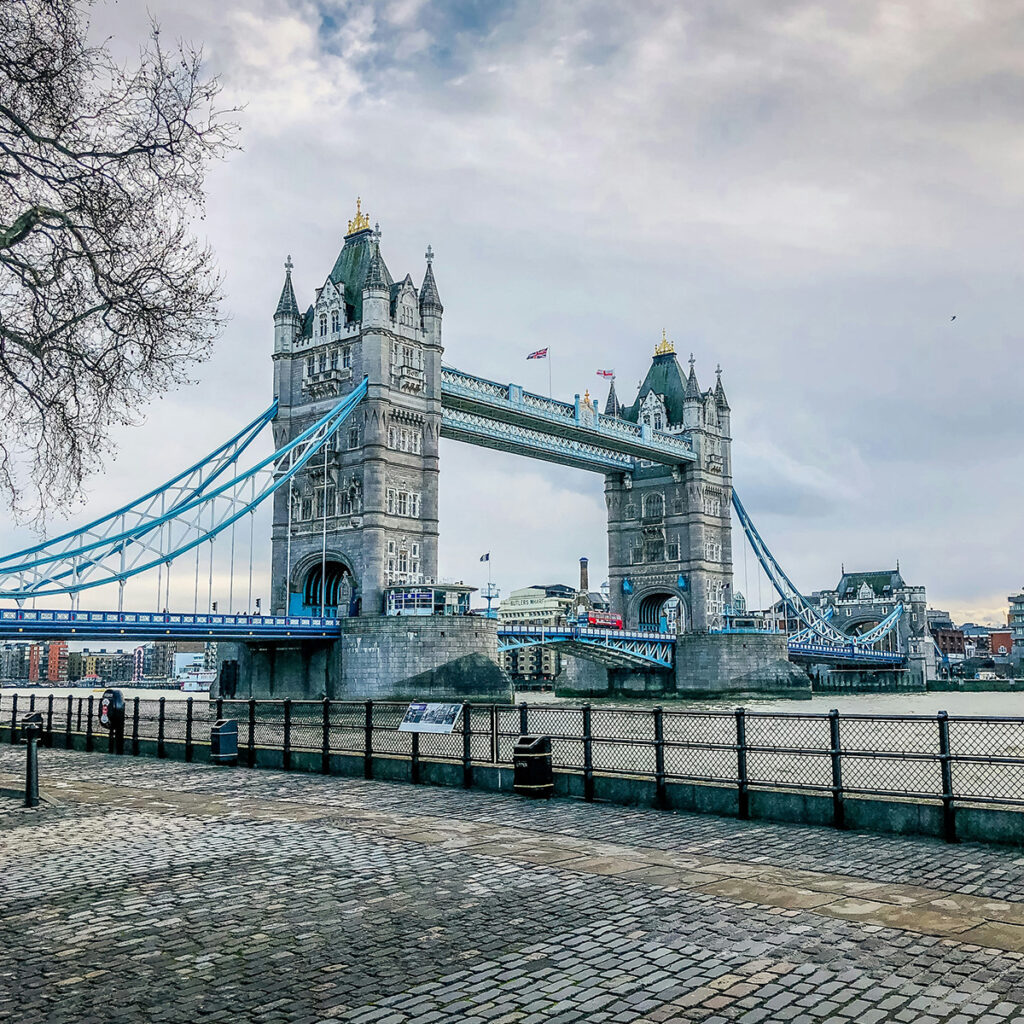
Last of the five, and probably the most photographed. Tower Bridge was completed in 1894 after eight years of construction. It was a response to a genuine problem: east London was growing rapidly, traffic was terrible, and there was no crossing downstream of London Bridge. The city needed a new bridge, but it also needed one that wouldn’t block the tall-masted ships that still used the Pool of London.
The solution was a bascule bridge — from the French word for seesaw. The roadway splits in the middle and the two halves can be raised to let ships through. Originally this was done using steam-powered hydraulic engines. Today it’s all electric, but the Victorian engine rooms are preserved and you can visit them.
The bridge still opens around 800 times a year. If you’re lucky, you might catch it in action during your tour — though it tends to happen at odd times and the road gets shut with very little warning. Our cabbies have a sixth sense for it. They can usually spot a tall ship approaching and get you into position before the barriers come down.
The high-level walkways between the two towers were originally designed for pedestrians to cross while the bridge was raised. They were closed in 1910 because they’d become a haunt for pickpockets and prostitutes. They reopened in 1982 as part of the Tower Bridge Exhibition and now have glass floors so you can look straight down at the traffic and river 42 metres below. It’s not for everyone.
Why these five together?
Plenty of people ask why we settled on these particular landmarks for our signature tour. The honest answer is that they tell a complete story. Start at Buckingham Palace and you’re in the world of modern monarchy. Move to Westminster and it’s democracy and governance. Cross to the Tower of London and you’re back in medieval England — conquest, imprisonment, execution. Finish at Tower Bridge and you’ve reached the high point of Victorian engineering and empire.
Between them, these five sites cover the Roman walls, the Norman Conquest, the Tudors, the English Civil War, the Great Fire, the British Empire, two World Wars and the present day. All within a few miles of each other. All connected by streets that our cabbies know like the backs of their hands.
That’s the thing about London. The history isn’t locked away in museums. It’s right there on the streets, layered on top of itself, hiding in plain sight. You just need someone who knows where to look.
Book the Big 5 London Tour — 4 hours, all five landmarks guaranteed, £299 per cab for up to 6 guests. Your driver picks you up from your hotel and drops you off wherever you like.
Latest Tour News & Facts
London At Night: The Best Landmarks to See After Dark
London With Kids: A Family-Friendly Sightseeing Guide
What Makes London Cabbies the Best Tour Guides in the World
A Wheelchair-Friendly Sightseeing Guide
Changing of the Guard: Insider Tips
Ready to see London the way it was meant to be seen? Jump in a classic black cab and let our expert cabbies take you on the tour of a lifetime. Private tours, historic landmarks, and memories you'll never forget.
Also available on Viator • GetYourGuide • TripAdvisor